Answering Service vs Call Center: Which Fits Your Business

The most common advice on answering service vs call center is to buy the cheapest minutes if you are small, then "graduate" to a staffed center once the phone gets busy. That advice treats every answered call as a win. It is not. A greeting that never becomes a booked job, a qualified enquiry, or a resolved issue is a cost, not a result.
The split is coverage versus resolution complexity. Coverage means every call is answered, captured, and sent somewhere useful, including at 7pm and on a Sunday. Resolution complexity means the caller needs a person who can change an order, read an account, or walk through a multi-step fix. Most trades, clinics, and professional firms need both, and they need them in that order. Start with a layer that never misses the phone. Add people only where the consequence of getting it wrong is high.
AI is already good enough to take that first layer. It does not replace a technician, a clinician, or a trained support agent. It complements them by handling predictable intent in the caller's language, then handing over with context when judgment matters.
Answering Service vs Call Center Side by Side
An answering service keeps every call answered and captured. A call center resolves structured, higher-volume interactions with teams, queues, and scripts. Both pick up the phone. They differ in what happens after the answer.
Commercial answering services grew out of a coverage problem. Operators and switchboards in the 1920s took messages for practices that could not staff a desk all day, and a documented U.S. example places one New Jersey service's local roots in that era, about 40 years before it changed hands in 1964, as the history of phone customer service traces. The modern call-center model is younger. Continental Airlines installed a Rockwell Galaxy automatic call distributor in 1973, so calls could queue and reach the next free agent. One model was built for continuity. The other was built for volume and process control.
| Criterion | Answering service | Call center |
|---|---|---|
| Core purpose | Keep every call answered, captured and routed | Resolve structured, higher-volume customer interactions |
| Typical call types | Greetings, messages, bookings, simple questions, urgent transfers | Sales, billing, orders, troubleshooting and support workflows |
| Staffing model | Shared reception staff or automated answering across several clients | Dedicated agents trained on the company's products and processes |
| Hours of coverage | Often 24/7 or after-hours overflow | Set by the company's own rota and service window |
| Routing and queues | Simple routing and callback scheduling | Automatic call distribution, queues and skills-based routing |
| Performance measures | Answer rate, message accuracy, booking rate | Service level, abandonment, handle time, first-call resolution |
| Best fit | Tradespeople, clinics and professional firms missing calls | Businesses with sustained support or sales workloads |
Read the table left to right on a single row, not as a scorecard. If your calls are short, repeatable, and valuable mainly because someone answered, the left column fits. If callers expect a fix that needs product training, system access, and a queue, the right column fits. Many small firms sit between the columns, so treat this as a starting map, not a verdict.
A dental practice after 6pm is a clean left-column case. Callers want the next opening, a cancellation slot, or a message for the hygienist. Capture the name, the reason, and the time, book what the calendar allows, and stop. A software company with a support queue is the other case. Password resets might be routine, but billing disputes and multi-step bugs need agents, scripts, and a path into the product. That is closer to full BPO customer support operations, where teams, quality checks, and process control are the point of the service.
Three questions before you choose
Answer these with last month's calls in front of you.
- Urgent or routine: What share of calls are emergencies, bookings, or simple questions, and what share need a real conversation?
- System access: How many calls can only be finished by someone logged into your calendar, dispatch board, or billing tool?
- Missed-call value: What is one lost job, one empty chair, or one qualified lead worth in pounds or dollars?
If most calls are routine and a miss is expensive, buy coverage first. If most calls are long and unfinished work piles up, buy resolution capacity.
Cost per Outcome, Not Cost per Minute
Assisted contacts such as phone or live chat carry a median cost near $13.50 per contact, against about $1.84 for self-service, in the contact center benchmarks summarized by Lorikeet. Those figures are a capacity baseline, not a price quote for your town or your trade. They still show why paying a full call center to take every "what time do you open" call is a poor use of agent time.
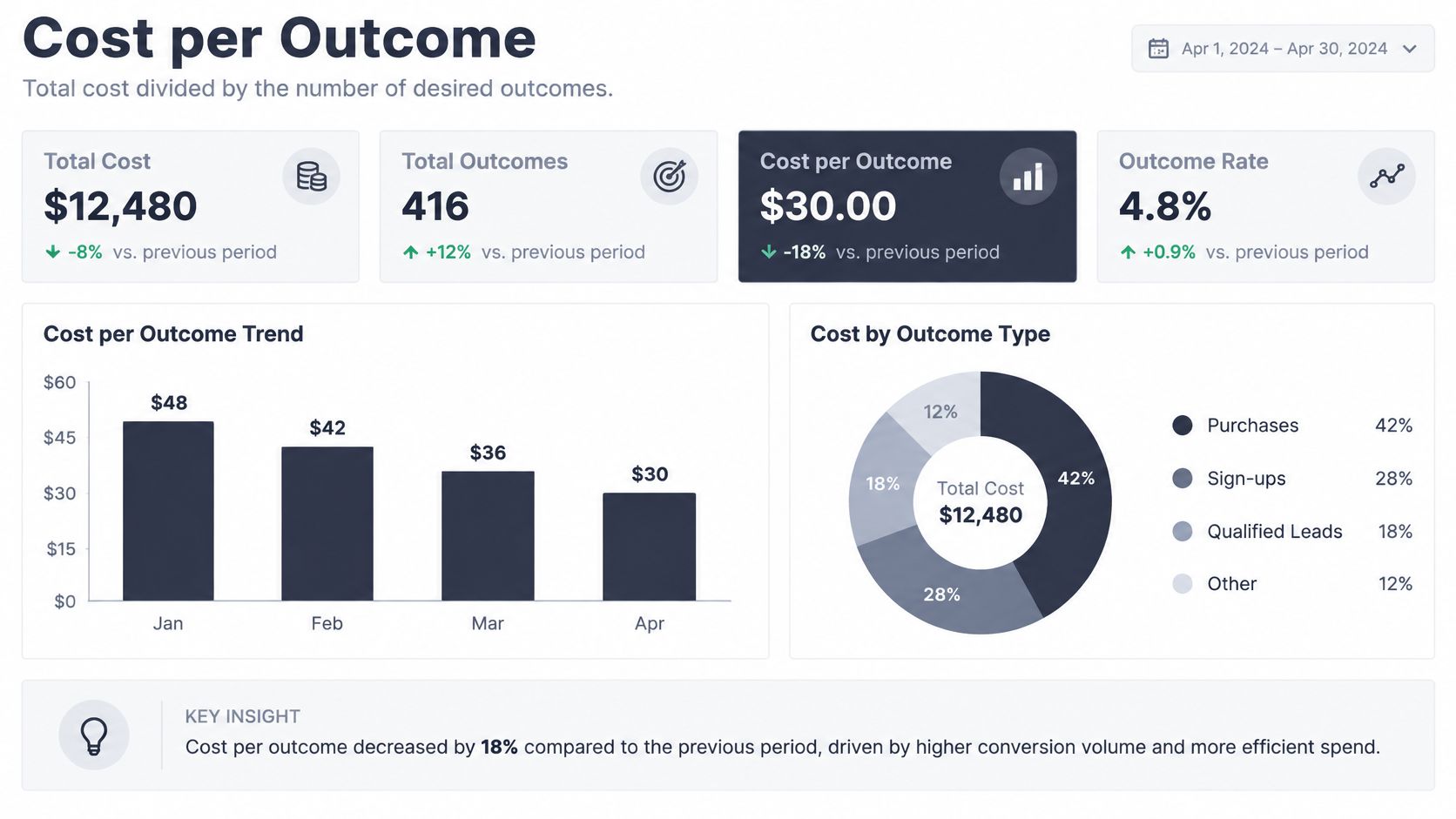
The method is simple. Take the monthly bill and divide it by completed outcomes: booked appointments, qualified leads, or issues closed. Do not divide by minutes, and do not divide by calls answered. A busy line can look cheap per minute and still be expensive per job.
A worked example, not a quote
Say a plumber receives 200 calls in a month. Sixty of those callers need a booking, and each booked job is worth about $180. Nothing below is a provider's price. It is arithmetic so you can see the trap.
- Option A, staffed call center at $2,400 a month: 45 bookings land. Cost per booking is about $53 ($2,400 ÷ 45).
- Option B, automated answering at $300 a month: 52 bookings land. Cost per booking is about $6 ($300 ÷ 52).
Option A answered with people and still produced fewer bookings. Option B cost less per minute and less per outcome because it caught the calls the plumber could not take on a job. A cheaper per-minute rate can still lose if it misses bookings. Flip Option B to 30 bookings and the $300 plan costs $10 per booking while leaking $180 jobs. The rate did not change. The outcome did.
Where the bill actually moves
A staffed center's cost rises with peak volume and with evenings, weekends, and holidays, because you are buying shifts. Automated answering is usually priced by plan or by minute, so those numbers have to come from each provider's own price sheet. On our Basic plan, 24/7 answering, appointment booking with calendar integration, email notifications, web chat, a choice of 10+ voices, and no setup fee sit in one plan. Nights, weekends, and holidays are not billed at a premium, which matters if your urgent calls cluster outside the working day. If you are comparing human services, our guide to what an answering service costs walks through how those bills are usually built.
Practical rule: Ask each provider for cost per completed booking, then test that figure over one billing month before you sign anything longer.
Track containment, transfer rate, booking conversion, time-to-follow-up, and revenue per qualified call beside that cost. Move work to a person when transfers climb or completed outcomes fall. Automation that swallows more calls while sending the same caller back tomorrow raises total cost, even if the per-minute line looks tidy.
Staffing, Hours and Coverage Compared
Calls bunch in the middle of the day, yet the ones that hurt often land at 7pm, on Saturday, or while you are already on another line. Coverage is a pattern across a working day, not a logo on a website.
An answering service, human or automated, is built to sit across that whole pattern. Shared reception staff work in shifts for several clients, so overflow and after-hours calls borrow capacity you do not employ yourself. A call center staffs a rota for its own queues. Coverage follows the window in the contract. Stretch that window and you pay for more agents, more breaks, and more supervisors, whether or not Tuesday night is quiet.
One electrician, two callers
An electrician is on a roof with both hands full. The phone rings. A second caller hits the line while the first is still waiting. A shared answering desk may pick up the second call if an agent is free, and may not if every client in that shift is busy at once. A call center with a queue will hold the second caller, which is fine if they will wait and useless if they hang up and call the next contractor.
An automated assistant changes the shape of that moment. Ours answers every call in seconds at any hour, including evenings, weekends, and the overlap when several customers ring together. The greeting uses your business name, then the call is sorted into emergency or routine. On the Professional plan, several calls are answered at the same time, so the second caller is not waiting on the first conversation to end. Concurrency still has a limit set by the plan, so ask what "several" means for your peak, and test it.
A missed call is only truly lost when nothing captures it. The test is whether every call ends in an answer, a booking, a message, or a transfer.
That is the standard I would hold any after-hours setup to, including a 24/7 answering setup for a small business. A voicemail that nobody checks before morning fails the test. A transfer that rings out to a phone left in the van fails it too.
Three numbers to collect this week
Write these down before you compare anyone.
- Hours you currently miss. Evenings, lunch, school run, jobs. Be specific.
- Peak simultaneous calls. The busiest 15 minutes, not the daily average.
- Call types that must reach a person at once. Gas smell, flooding, a patient in pain, a buyer who will not wait.
If those three numbers are ugly and your fixes are short, an answering layer wins on coverage. If callers already reach you and the failure is a 20-minute troubleshooting call, staffing a real queue is the honest next spend.
Call Handling Metrics to Track
Counting "calls answered" hides the trade-off. An answering layer can look perfect on that number and still book nothing. A call center can miss the service-level target and still close the hard cases. You need both kinds of measure, and you need them separate.
A conventional center is judged on queue performance, not on whether someone eventually picked up. The usual 80/20 service level means answering at least 80% of offered calls within 20 seconds. Alongside that, call center statistics for 2026 put average speed of answer at roughly 20–40 seconds and abandonment at 3–8%, with under 5% generally considered good. First-call resolution sits around 70–75% on average, and 80% or higher is treated as world-class in the same benchmark set used for assisted-contact cost.
| Metric | Common target | What it tells you |
|---|---|---|
| Service level | 80% of calls answered within 20 seconds | Whether callers wait too long |
| Average speed of answer | Roughly 20–40 seconds | Typical wait before a person picks up |
| Abandonment rate | 3–8%, with under 5% generally considered good | Callers who hang up before reaching anyone |
| First-call resolution | 70–75% average, 80% or higher world-class | Whether the issue is solved without a callback |
| Booking or qualified-lead rate | Your own 30-day share of calls that become a booking or a qualified enquiry | Share of calls that become appointments or enquiries |
How to read the table against each model
For an answering service, the useful row is not handle time. Track answer rate, message accuracy, callback time, and booking or qualified-lead rate. A strong answer rate with a weak booking rate means the phone is covered and the script, the calendar rules, or the follow-up is not. For a call center, add average handle time, transfers, and first-call resolution. Long handle time is not automatically bad. It is bad when the same issue comes back the next day.
A lightweight answering layer will often score high on answer rate and lower on resolution. That is the design, not a failure. It exists to reach people and to finish the short calls. It is not a substitute for an agent who can see the account.
If our assistant cannot answer a query, it takes a message or forwards the call to a human, depending on the settings you choose, and no call is lost. That rule belongs on the scorecard as escalation rate and unresolved calls, not as a hidden miss. Pair it with answer rate, qualified-lead rate, appointment-booking rate, and abandoned calls. Call reporting software only helps if those fields exist before you turn it on.
A 30-day baseline
For 30 days, record each metric in the table from whatever answers the phone today, even if that is you. Then put every provider against the same numbers for the same call mix. A vendor who will only report "calls answered" is asking you to ignore the trade-off. I would not sign on that report alone.
Matching Call Types to Automation or Staff
Split the work by consequence, not by how many times the phone rings. A missed plumbing emergency costs a job and, sometimes, a ceiling. A missed "what time do you close" costs almost nothing if the website is right. Volume is a capacity question. Consequence is a design question.
People will not sit with automation forever. One customer-service analysis reports that 92% of consumers give an AI system less than 10 minutes before asking for a person, while trust in AI resolution rises from 26% to 55% when a human option is available, according to Stealth Agents' customer-service research. The design that matches those numbers is explicit escalation, not a bot that refuses to let go.
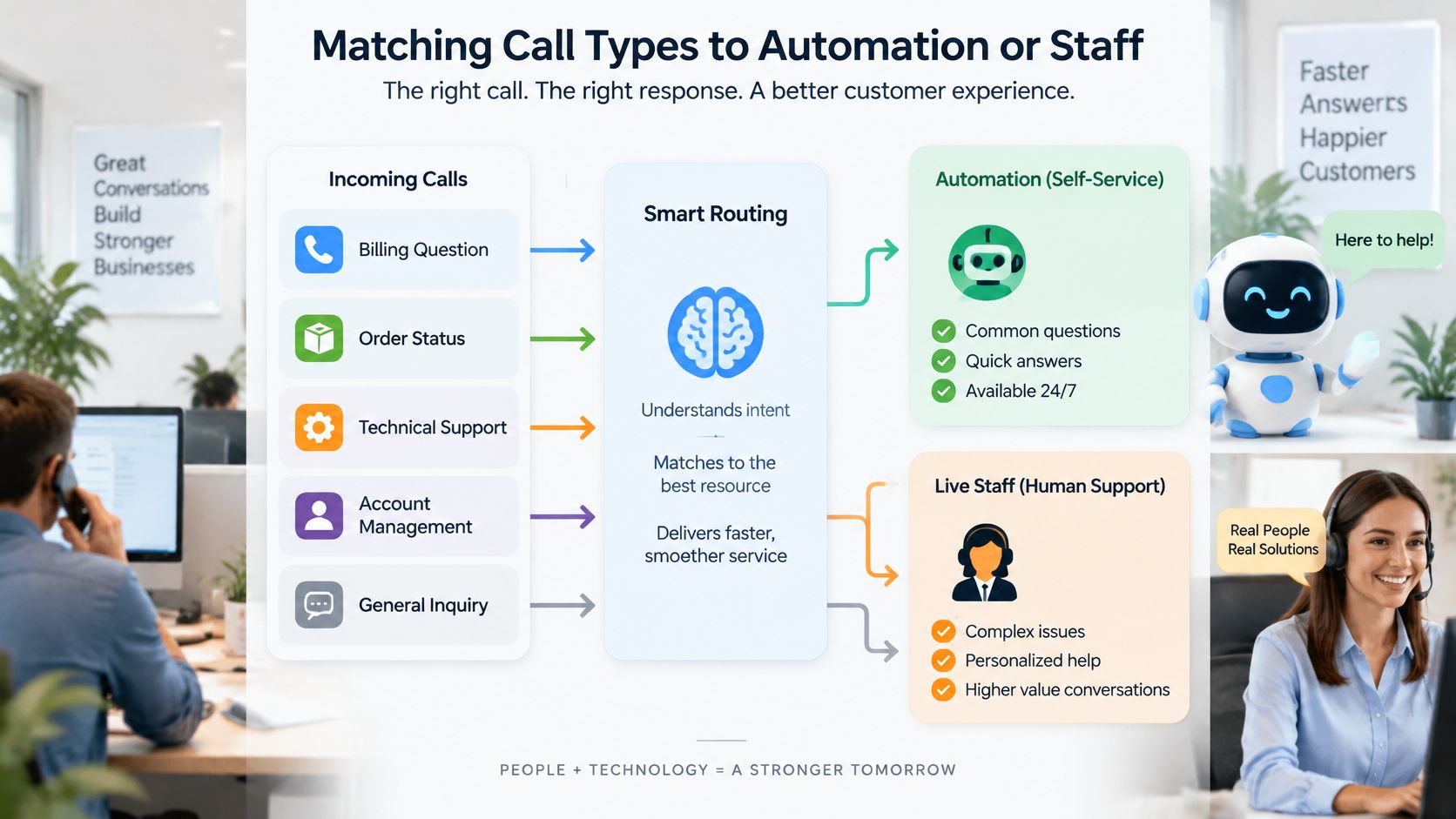
Move the call to a person immediately when the caller asks for one, sounds frustrated, raises a complaint, or wants an exception: a refund, a warranty decision, a medical concern, or a legal interpretation. The assistant can still collect name, intent, urgency, and preferred callback method so the person starts with context instead of a second interrogation.
| Call type | Handle with | Escalate to a person when |
|---|---|---|
| Emergency or urgent job | Automated triage, then immediate transfer | Caller describes danger, a leak, an outage or an injury |
| Routine opening-hours question | Automated answer | Caller asks for more detail or disputes the answer |
| Appointment booking | Automated booking into the calendar | Requested slot is full or caller needs a specific practitioner |
| New lead qualification | Automated questions, then a summary by email | Lead meets the business's high-value criteria |
| Complaint, refund or warranty | Capture details and schedule a callback | Always, from the first contact |
| Caller asks for a human | Transfer or callback, per business rules | Immediately |
Following the rules you set, we forward important calls to the right person or take a callback, and urgent calls reach you right away. A caller who asks for a person is transferred or gets a callback, again by your rules. That is the complement, not a replacement. Predictable intent stays on the assistant. Consequence stays with you. If you want the handoff written as a procedure, use a simple escalation path for live calls and keep the triggers on one page the whole team can see.
Language is part of the same handoff
Multilingual support is a retention issue. In a survey of 170 non-native English-speaking SaaS customers and 135 support-team leaders, 29% of businesses reported losing customers because they did not offer multilingual support, and 62% of customers were more willing to tolerate product problems when they could speak to support in their own language, in TranslateDesk's 2026 multilingual support figures. That survey is SaaS, not trades or clinics, so measure your own callers before you treat 29% as your loss rate.
The practical start is still the same. Detect the caller's language, answer routine questions in that language, and transfer exceptions with the language preference and a short summary attached. The assistant answers in six languages, and that is included in the Basic plan, so you do not hire a separate person for each language on day one. You hire, or you pick up the phone yourself, when the call crosses a line you wrote down.
Write the triggers this week
- Danger words: leak, smell of gas, no power, injury, locked out.
- Money and trust: refund, warranty, complaint, "I want the owner."
- Clinical or legal judgment: anything you would not let a receptionist decide.
- Your high-value lead: job size, postcode, or budget that should wake a person, not sit in an inbox until Monday.
If a trigger is not written, the assistant will guess, and guessing is how urgent calls become polite messages.
Choosing the Right Model for Your Business
Match the model to the work, not to a slogan about growth.
| Business situation | Better fit | Why |
|---|---|---|
| Solo tradesperson missing calls on jobs | Answering layer with AI intake | Calls are short and routine, and coverage matters most |
| Clinic with appointment-driven calls | Answering layer with booking and escalation | Booking rules are repeatable, and clinical questions go to staff |
| Law firm or estate agency taking qualified enquiries | Answering layer with qualification and summaries | Speed to follow-up decides which lead converts |
| High-volume support with multi-step fixes | Call center | Workloads need queues, skills-based routing and long handle times |
| Multi-location operation with mixed call types | Hybrid | Automate predictable intents and route exceptions to specialists |
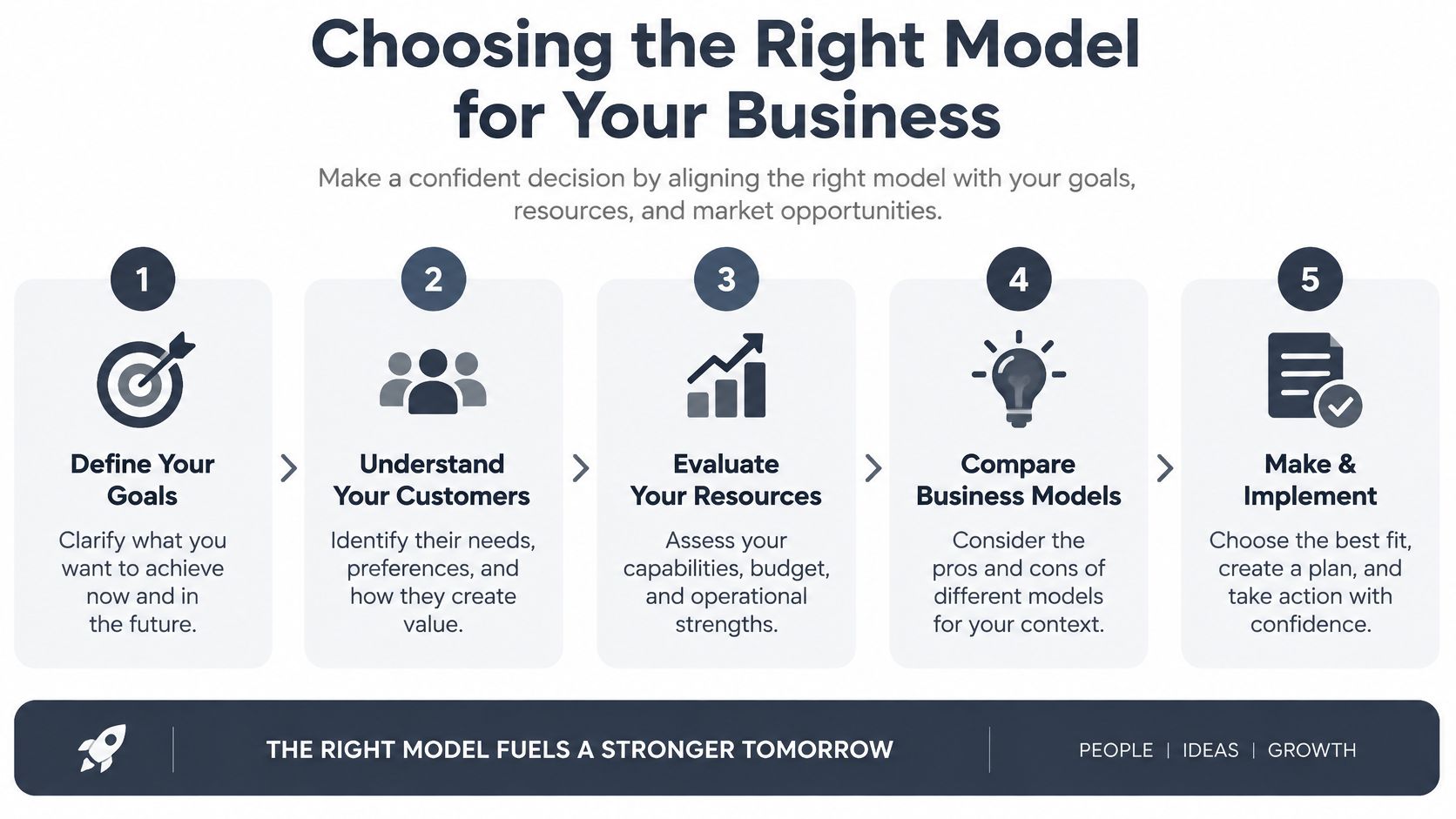
I would not talk a high-volume support team out of a call center. If agents need skills-based routing, long handle times, and a queue that survives a product outage, a staffed center is the better answer. Outsourcing that work only pays off when the service levels are written down first. A plain guide to call center SLA and quality planning is worth reading before you price seats, because a cheap seat with no abandonment target just moves the wait somewhere else.
For almost everyone else on that table, the default is a hybrid. An answering layer gives every call an immediate, consistent first response and finishes the routine intents. Trained staff, or a specialist workflow, take the complex cases. Phone still carries the hard conversations. A 2025 survey of consumers in the United States, the United Kingdom, and Canada found that 74% preferred the phone for complex or urgent issues, against 56% for general issues, and Deloitte's 2026 survey, cited in the same answered-call gap report, found that 77% expect companies to anticipate and solve problems proactively. An answering layer that only takes a message, and never books or escalates, misses that expectation.
AI is good enough to be that layer, provided the escalation rules are explicit. It is not good enough to be your only employee on a complaint, a clinical question, or a legal intake decision. rednea's solutions for this coverage job are an AI receptionist, an AI answering service, after-hours answering, and a virtual switchboard with AI. We already answer hundreds of calls every month for small businesses on that pattern: short calls in, bookings and summaries out, urgent calls pushed to a person.
Do this in the next two weeks
- List last month's missed calls by type. Emergency, booking, hours, lead, complaint.
- Assign each type to automation, staff, or escalation using the call-type rules you just wrote.
- Compare providers on cost per booked outcome and on those escalation rules, using one billing month of real arithmetic, not a per-minute headline.
- Run a two-week pilot and track service level, abandonment, booking rate, and unresolved calls against the same baseline.
If the pilot books more work and the urgent calls still reach a person, keep the hybrid. If the pilot only produces tidy answer rates and messy follow-up, you bought coverage theater. Change the rules before you change the vendor.
---
rednea is an AI phone assistant for trades, clinics, and other small firms that cannot sit by the phone. It answers around the clock, books routine appointments, qualifies straightforward enquiries, and escalates the calls that need a person, so you are comparing cost per booked outcome instead of hoping a missed call calls back. See how that coverage layer works for your line at rednea.
Try rednea, no strings attached
AI phone assistant for business. Hear a live demo in your browser, book a call with our team, or get started — from £90/month, cancel monthly, no minimum term.
GDPR-compliant · EU & UK GDPR · Multilingual