French Language Support for Small Business Calls


You're on a job, in a meeting, or with a patient when the phone rings. The caller speaks French. Your menu offers French, so they choose it and wait. Then they reach someone who can't help them in French, or nobody answers at all. They don't leave a message. They call the next business on the list. That failed handoff is the problem with French language support, and it's fixable without hiring a full-time receptionist.
Why French Callers Still Leave
A plumber is under a sink when his phone buzzes in his pocket. A dental receptionist has a patient at the desk and two lines already holding. A solicitor is with a client and can't step out. In each case, a French-speaking caller has a simple need. They want a visit, a check-up, or a callback. They just can't finish the request.
That pattern isn't rare. A 2024 to 2025 audit of French-language primary care in Canada's Northwest Territories found patients often met English-speaking staff after selecting French, reached unanswered French service lines, or waited while clinics looked for a French-speaking clinician or interpreter. The menu said French. The service behind it didn't follow through.
Where the Call Breaks Down
Think about what a caller needs to do. It's a chain, and one weak link ends it:
- Greeting: Someone answers quickly and confirms French is fine.
- Understanding: The request is heard correctly, including urgency.
- Details: Name, phone number, address, and job are captured without guessing.
- Booking or qualifying: A time is offered, or the lead is passed on with enough detail.
- Confirmation and follow-up: The caller knows what happens next, and your team gets a usable summary.
If the greeting is in French but the booking slips back into English, the caller feels misled. If the address is wrong, your engineer drives to the wrong street. If nobody writes down the urgency, a leak becomes water damage by morning.
A French option that drops the caller back into English can frustrate more than having no French option at all.
For trades, clinics, freelancers, and other small teams, the cost is direct. A missed call is often a missed job, a missed appointment, or delayed care. It's worth checking what that costs you with a missed call calculator before you decide it's a minor issue.
You have three broad choices. You can rely on people alone, use basic translation, or add an AI phone assistant as a first layer. The right answer for most small teams is a mix. People handle judgment and exceptions. Software handles the calls you'd otherwise miss entirely. The test for every option is the same. Can a French-speaking customer finish the whole job in French?
What French Language Support Really Means
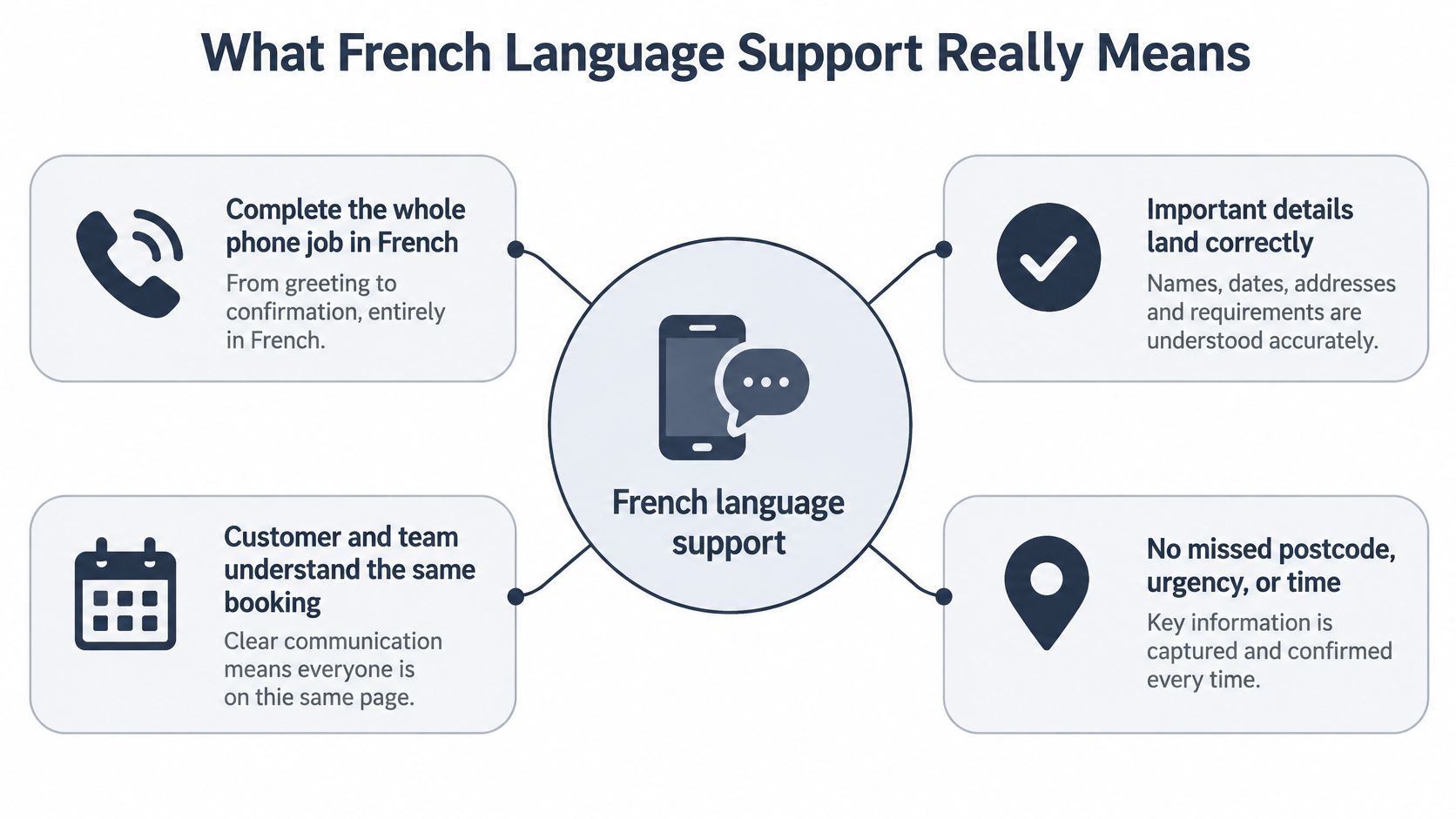
A caller phones a plumbing business in French to report a leaking pipe. They need to explain where the leak is, share the address, understand what happens next, and receive a clear confirmation. French language support means completing that whole phone job in French, from the greeting through the follow-up, with the details recorded correctly.
A receptionist offers a useful model. They listen, clarify what the caller needs, and know when to bring in a colleague. A French greeting alone is only the first step. The test comes when the caller has to give an address, explain a problem, or confirm an appointment.
Why French Is Bigger Than France
French-speaking callers may live in France, Belgium, Switzerland, Canada, or countries across West, Central, and North Africa. They may be local residents, visitors, new arrivals, or customers calling across borders. The Organisation internationale de la Francophonie's estimate of 321 million people able to express themselves in French in 2022 shows the language's reach. For a small business, the practical lesson is to serve the French-speaking customers who call, wherever they are from.
One Script Does Not Fit Every Caller
French varies by region. Pronunciation and everyday vocabulary can differ, as can how callers say names, numbers, and addresses. A system familiar with one variety may misunderstand another, especially over a noisy phone line.
Start with shared service vocabulary: the names of your services, the questions you need answered, and the phrases you use to confirm next steps. Then adjust greetings, local terms, time zones, and confirmation methods for the customers you serve. A plumber might recognize different words for the same repair, while a clinic might need to account for local appointment terms.
Judge the call by what it gets right. Were the customer's request, address, and preferred time recorded accurately? A friendly conversation that produces a wrong booking still leaves work for your team. Begin with a small set of common calls, review the resulting records, and refine the wording wherever callers or staff have to correct a detail.
How AI Complements Your Team
A French-speaking caller reaches your plumbing business at 7 p.m. They need a leaking pipe assessed, want to know whether someone can come tonight, and need to give you the address. The first layer of support should let them complete that task in French, then pass the details to a person who can make the call on urgency and scheduling.
Keep your bilingual staff on judgment, complaints, and exceptions. Give the assistant the repetitive first layer: greeting, intake, and a clear summary. That division helps callers get a response while your team is busy or off the clock.
What the Assistant Can Safely Take
Start with frequent, low-risk tasks that are easy for your team to check:
- Recurring questions: Opening hours, service areas, preparation instructions, and documents to have ready.
- Basic intake: Caller name, phone number, service address, and reason for calling.
- Urgency marking: Routine, soon, or urgent, using categories your team defines.
- A short summary: The caller's request and details, sent to the person who will follow up.
For example, a French call after hours can be greeted, recorded, and routed instead of going unanswered. The caller gets a clear next step, and your team receives the details needed to respond. An AI phone call assistant can handle this first layer, while your team takes over decisions and follow-up.
What Stays With a Person
Set the handoff rules before turning on call coverage. People should handle complaints, emergencies, sensitive health or legal details, payment disputes, and requests outside the approved answers. If a caller asks for a person, connect them or give them a clear callback expectation.
Practical rule: Let the assistant collect and route information. Let your team decide, reassure, and resolve.
Check whether the arrangement is working with a few simple measures. Count missed calls each week. Note time spent on routine questions, and how many leads arrive fully qualified with a name, job, and contact details. Track the share of calls passed to a person and the reason for each handoff. If callers keep transferring over the same question, revise the approved answer. If missed calls fall and summaries are usable, add another call type gradually.
Comparing Ways to Cover French Calls
A French-speaking caller may need an appointment, an urgent repair, or a simple answer. The right coverage depends on whether they can complete that task in French, and on who is available to help.
A French-speaking person on the phone can follow tone, clarify unusual requests, and reassure an upset caller. The trade-off is availability. A staff member handling calls between other duties may be busy with a customer, away from the desk, or off work.
Machine translation can help draft a written reply. On a live call, it may miss names, addresses, dates, or intent, and it cannot confirm those details back to the caller. It is not a substitute for a French-speaking person who can carry the conversation through to a clear next step.
Four Ways to Handle French Phone Calls
| Approach | Best fit | Main limit | Start here if |
|---|---|---|---|
| French-speaking person live | Complex, sensitive, or high-value calls | Hard to cover busy periods and evenings | You already have someone available during call hours |
| Bilingual staff doing two jobs | A small number of straightforward calls during office hours | Calls compete with other work | French calls are occasional and simple |
| Machine translation or basic menu | Written messages and simple notices | Can miss spoken details and caller intent | You need a rough understanding or a translated written reply |
| AI phone assistant | Routine calls, after-hours coverage, and overflow | Exceptions still need a person | Calls are going unanswered when your team is busy |
A bilingual virtual receptionist can provide a first layer of coverage while leaving sensitive or unusual calls to your team. Rednea detects the caller's language and can converse in English, Spanish, French, German, or Italian. It can book appointments, answer routine questions, qualify leads, and pass selected calls to a person. It writes bookings into the calendar and customer system you already use, so nothing has to be re-typed. It can also email a call summary, with optional SMS. Setup is handled for the business and takes about 30 minutes; billing is per minute, with top-ups.
Before choosing a service, ask where call data is stored, what information is retained, and how deletion requests are handled. Check how the provider addresses European and UK GDPR requirements. Clear answers should be part of your selection.
A mixed approach often fits a small team: AI handles routine calls and gaps in coverage, while a named person takes exceptions. The trade-off is straightforward. You spend less staff time covering every hour, but you need clear rules for when a call reaches a person. Start with the times you currently miss calls, then choose coverage for those hours.
Starting French Support on Real Jobs
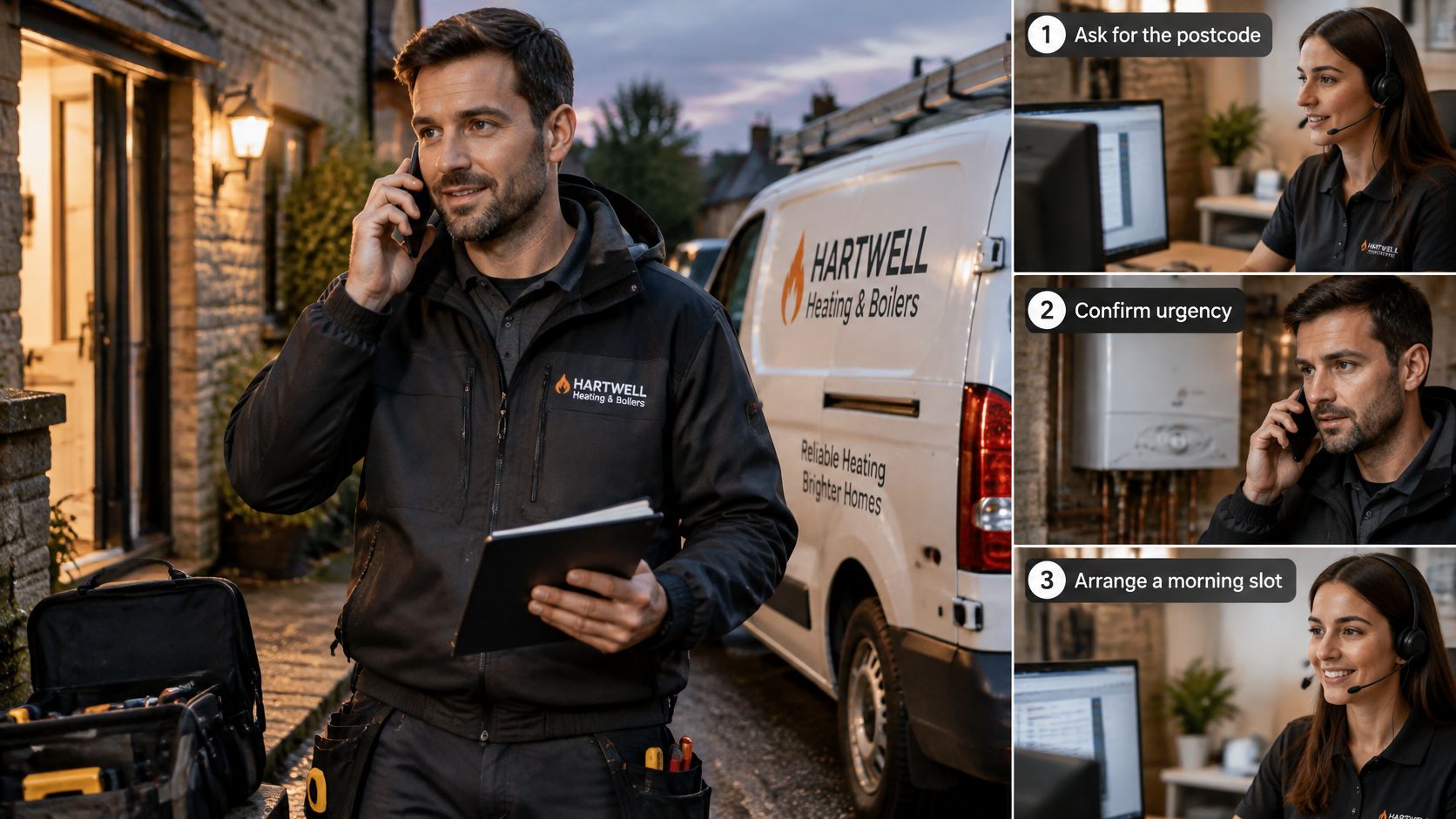
At six in the evening, a heating engineer is driving home when a French-speaking customer calls about a leak. A first-layer assistant can ask where the leak is, capture the postcode, check whether water is still flowing, and offer an available morning slot. Before confirming, it reads back the address and time. The engineer receives a summary with the urgency, address, and access notes when he parks.
A dental practice can use the same first layer for opening hours and check-up bookings. The assistant answers from approved information, offers a slot, and confirms the mobile number for a reminder. If the caller describes pain in detail, the call follows the practice's urgent route to a staff member.
For a solo estate agent, the job may be to arrange a viewing. The assistant records the property, preferred times, caller's name, and number, then repeats the details back. The agent can return the call with the request in front of her rather than trying to make sense of a partial voicemail.
These examples work because the caller can complete a practical task in French. The assistant gathers and confirms routine details, while a person handles requests that need judgement.
Your First-Week Setup
Set up a small, approved set of answers and actions before opening French support to every call type. Start with the information you can state confidently: opening hours, service area, booking rules, and what customers should bring. Add the French terms callers use for your services, local streets, and documents.
Then set the operating rules. Decide which diary slots can be offered, how bookings are confirmed, and which requests must reach a person. Write a short French greeting and a read-back script so names, addresses, dates, and times are checked aloud.
Keep the first version narrow. If a request falls outside the approved list, the assistant says so in French, takes the caller's name and number, and passes the request to you the same day.
During the first week, review each call summary and note any missed or incorrect details. Correct the approved information and scripts before adding another type of call. That gives you a controlled way to expand without asking the assistant to handle more than your team can check.
Testing Privacy and Success Measures
Don't judge French support by one tidy test call from a quiet office. Test the calls that go wrong. A fluent reply can still hide a wrong street name, a swapped date, or a phone number missing a digit.
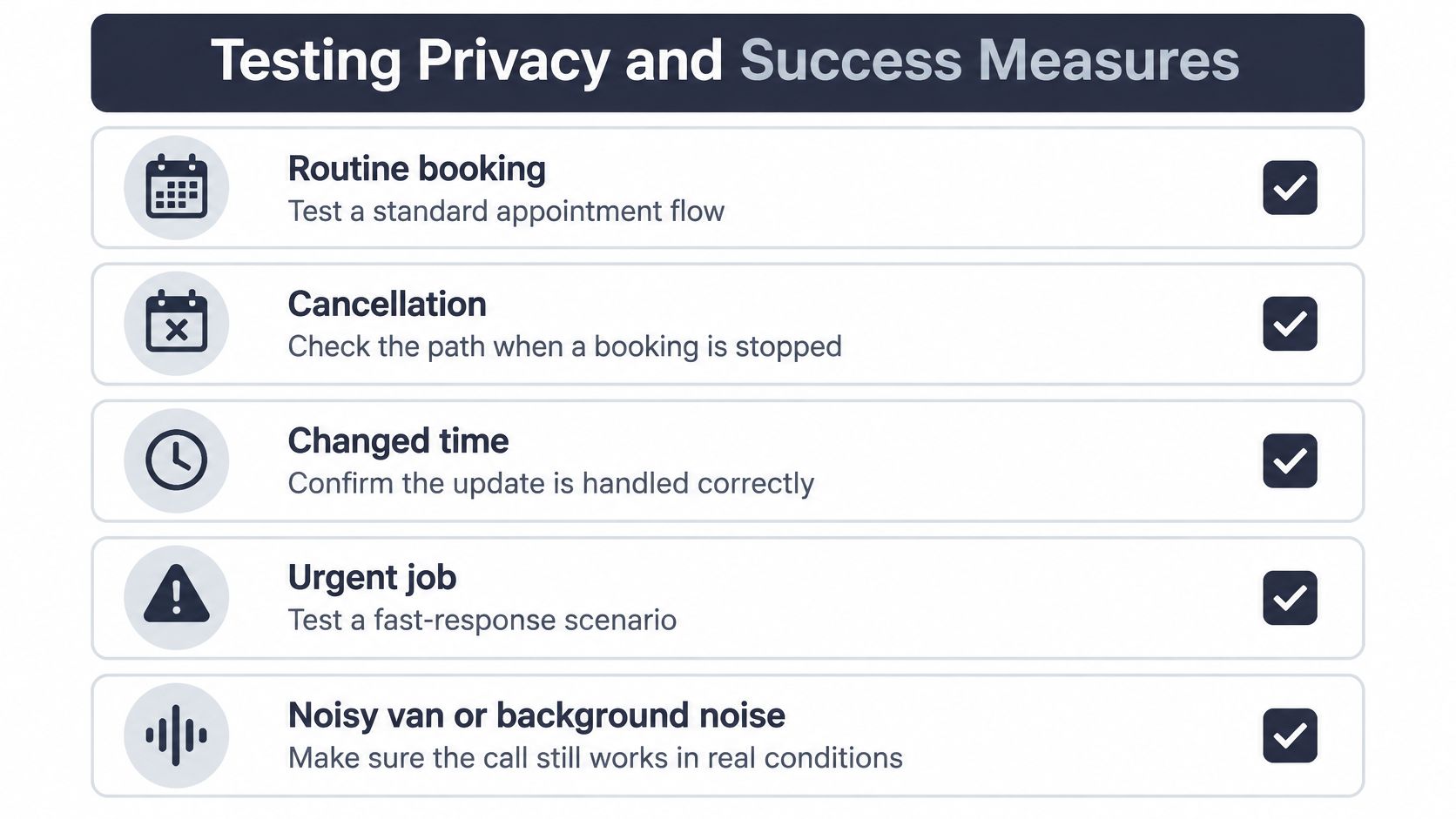
Run these scenarios in French before you trust the setup. Try a routine booking, a cancellation, and a changed time. Try an urgent job using the words a stressed caller would use. Make one call with van or clinic noise behind you, one with a strong regional accent from a market you serve, and one where the caller asks for a person straight away.
That last call matters most. A caller who wants a person and can't reach one will hang up and dial the next number on the list.
Check Details, Not Fluency
Speech recognition is measured by word error rate, where lower is better. The LeBenchmark evaluation of French speech models reported 33.46% test word error rate for a French-specific model versus 36.03% for a multilingual model on the ETAPE corpus, which shows how much conditions and language fit change results. Telephone bandwidth, background machinery, and regional speech all shift accuracy, so one average score tells you little.
Check the details that decide whether the job goes right:
- Names and street names: Read them back and confirm spelling where needed.
- Phone numbers and emails: Repeat them in chunks, not as one fast string.
- Trade or clinical terms: Test your own vocabulary, not generic words.
- Dates and times: Confirm day, date, and time together to catch mix-ups.
When confidence is low, the system should ask again or escalate. It should never guess a booking into your diary. A short confirmation question costs seconds. A wrong visit costs an hour.
Privacy in Plain Terms
Collect only what the booking needs. Tell callers when a call may be summarized for follow-up. Keep health, legal, and payment disputes with a human, and honor deletion requests promptly. A practical GDPR compliance checklist helps you turn that into daily habits for EU and UK work. Store only what's necessary, use European infrastructure where offered, and make sure real-time deletion on request happens in your process.
Keep a short scorecard from week one: customer corrections, repeat calls, and the reason each transfer happened. Then add one question only you can answer. Did the summary reach the right person fast enough to win the job? If that answer keeps being no, fix routing before you add more call types.
Your Next Step This Week
Don't redesign your whole phone system this week. Pick ten real call types from last month. Write them on one page, in plain words. Then mark which ones a French-speaking customer could finish without a person if the answers were approved in advance.
A plumber, clinic, or solo electrician often finds the same first group: opening hours, service area, a standard appointment, a price range you already quote, and a callback request with a clear reason. Those five become your first knowledge base, written once and checked by the person who does the work.
Everything else stays on a named human path. Emergencies go to a person. Sensitive health or legal matters go to a person. Complaints and payment disputes go to a person. Write the names next to each category so a caller never lands in a gap between software and staff.
Run the test calls described in the testing section, and include one change of appointment. Use one acceptance rule: the name, address, job, and time survive the read-back on every test call. If a detail fails twice, shorten the question or add a confirmation step before you go live.
After the first week of live calls, review the scorecard and fix one weak answer before you add another call type.
Keep the goal narrow. A French caller should finish the whole routine job in French, while your team stays the second layer for judgment calls. The assistant earns its place only when it passes the read-back and sends clean details; people keep the calls where a wrong guess has real cost.
The next French call that rings while you are under a sink or with a patient gives you three options. Answer it yourself and stop paid work. Let it go to voicemail and hope. Or let a tested assistant take the routine ones, finish the booking in French, and bring you only what needs a human.
If French-speaking callers reach you while you are on site, with patients, or in meetings, rednea can answer at once, detect French, book or qualify the call from your approved answers, and send a short summary for follow-up. Setup is handled for you with per-minute billing, so you can start with routine calls this week and keep exceptions with your team. Set up your first call types and test them in French before your next busy day.
Try rednea, no strings attached
AI phone assistant for business. Hear a live demo in your browser, book a call with our team, or get started — from £90/month, cancel monthly, no minimum term.
GDPR-compliant · EU & UK GDPR · Multilingual