AI Voice Agent Pricing Explained for Small Businesses

Usage-based AI voice-agent platforms run roughly $0.03 to $0.14 per minute, while SMB subscription plans commonly cost $49 to $499 per month. Your real total cost tracks call volume and the layers inside each call more than the plan name.
A plumber is under a sink when the phone starts ringing. He can't answer, the caller reaches voicemail, and a potential job disappears while he opens a pricing page on his phone. The page offers “starter,” “growth,” and “scale” plans, but says little about transferred calls, recording, model usage, or what counts as a billable minute.
That pricing is not good enough. AI voice-agent pricing is a layered cost model, and a sensible buying decision starts with the actual call path, not the sticker price. By the end of this guide, you'll know how the bill is built, which model fits your call pattern, what a fair quote should include, and which questions to ask before you sign.
What AI Voice Agents Really Cost
The headline ranges give you a useful starting point. Public market estimates place usage-based platforms at approximately $0.03 to $0.14 per minute, while SMB-oriented subscription plans commonly range from $49 to $499 per month. Those figures describe the market's visible pricing, not necessarily your complete operating cost.
A solo electrician with irregular inbound calls may spend less with usage billing because quiet months don't consume a fixed allowance. A dental practice with steady appointment traffic may prefer a subscription because predictable capacity matters more than occasional unused minutes. A growing service company may need a hybrid plan that includes a base allowance and charges transparently for additional usage.
The important question is simple: what sits behind the price? A call can involve carrier minutes, speech recognition, language-model processing, voice generation, recording, storage, calendar access, CRM updates, and a transfer to a person. Two providers can quote the same per-minute rate while including very different parts of that stack.
Practical rule: Ask for the total cost of a typical call, not just the advertised rate. Use your average duration, transfer rate, languages, integrations, and recording requirements.
For a small business, the right starting point is usually narrow. Let the agent answer opening hours, common questions, appointment requests, and basic lead qualification. Keep unusual, sensitive, or high-value conversations with people. That approach lets the business test call quality and customer response without committing to an oversized deployment.
The price becomes easier to judge once you know your own usage. Record your recent calls, estimate average duration, mark how many require transfers, and separate routine calls from calls that need staff judgment. That small exercise gives you a much better negotiating position than choosing the cheapest plan label.
The Four Main Pricing Models Compared
Vendors generally use four billing structures. None is automatically right or wrong. The fit depends on whether your call volume is unpredictable, whether your team needs shared access, and whether you value a fixed monthly budget over paying only for actual usage.
| Pricing model | How you're billed | Best for | Watch out for |
|---|---|---|---|
| Per-minute | You pay for connected or billable conversation time | Variable call volumes, pilots, and seasonal businesses | Minimum top-ups, rounding rules, transfer billing, and separate carrier fees |
| Flat subscription | You pay a fixed monthly amount for an allowance or feature set | Businesses that need predictable budgeting | Unused minutes, fair-use limits, and expensive overage rates |
| Per-seat licensing | You pay according to users or staff access | Teams sharing dashboards, call records, and workflows | Paying for seats when the real driver is call volume |
| Tiered usage | The effective rate changes at different usage levels | Businesses with stable and forecastable demand | Losing unused capacity or moving into a higher tier unexpectedly |
Per-minute billing
Per-minute pricing suits a tradesperson, freelancer, or new deployment where demand changes from week to week. You pay in proportion to conversations, and a top-up model can prevent a large fixed commitment during a quiet period.
The fine print matters. Does the provider bill from connection until hang-up, or only while the agent is speaking? Are partial minutes rounded? Does a transfer create another charge? Are outbound calls priced differently from inbound calls? A low number is meaningless if the meter starts early and ends late.
Flat subscriptions
A subscription makes forecasting easier. A practice that receives steady appointment calls may prefer one predictable invoice rather than variable usage every month. The downside appears when demand falls, the allowance expires, or overage rates are much higher than the included rate.
Subscriptions also hide capacity limits. “Unlimited” may still come with fair-use controls, concurrency restrictions, or exclusions for international traffic and premium features. Read the allowance as carefully as the monthly fee.
Per-seat and tiered usage
Per-seat pricing makes sense when several employees need access to call summaries, recordings, routing rules, or analytics. It becomes wasteful when the business has few users but heavy call traffic, because the seats don't explain the actual infrastructure cost.
Tiered usage works when you can forecast demand. It can reward volume, but only if your calls are consistent. A seasonal company may pay for capacity it uses for only part of the year.
For a deeper explanation of why usage-based billing can align price with real demand, see this guide to usage-based pricing.
The model matters less than transparency. A provider that shows how it counts minutes, transfers, recordings, and overages is easier to trust than one hiding behind names such as “pro” or “business.”
What Drives Your Bill
A ten-minute customer call can create several billable events. The invoice reflects the services running underneath the conversation:
1. Telephony connects the caller and carries audio. 2. Speech recognition converts incoming speech into text. 3. Language-model inference decides what the agent should say or do. 4. Text-to-speech turns the response into spoken audio. 5. Storage and integrations retain records and update calendars, CRMs, or help desks. 6. Human transfers can create additional call legs.
Telephony is only the first layer. Published US carrier rates list local inbound calling at $0.0085 per minute and local outbound calling at $0.0140 per minute. A 10-minute inbound local call therefore has a baseline carrier cost of approximately $0.085, before speech recognition, model inference, text-to-speech, storage, integrations, and support are added.
A local number may add a monthly charge, while recording can add a per-minute fee. Transfers deserve close attention. Sending a caller to a person may create separate inbound and outbound legs, so one customer conversation can consume more carrier usage than its elapsed time suggests.
Why equal call lengths produce different bills
Call duration alone does not determine AI usage. A caller may answer in a few words while the agent gives directions, explains a policy, checks availability, and confirms details. Two calls with the same duration can therefore produce different amounts of input and output audio.
Published real-time voice pricing illustrates the distinction. A full model lists audio input at $32 per one million tokens and audio output at $64 per one million tokens, while a smaller model lists $10 and $20 respectively. Some voice-session products instead bill by elapsed time, such as $0.05 per minute, with model and tool usage charged separately. (published real-time model pricing)
Turn-taking, interruptions, silence detection, prompt length, tool calls, and model choice all affect the total. A verbose agent can cost more than a concise one. A workflow that repeatedly checks calendars, CRMs, or other systems can cost more than a simple FAQ interaction.
For forecasting, separate the bill into fixed charges, usage charges, and exception charges. Fixed charges cover numbers or subscriptions. Usage charges cover minutes, audio, model processing, and storage. Exception charges include transfers, international traffic, premium voices, and custom support.
Read the invoice like an operator
Check each line item:
- Carrier usage: inbound, outbound, toll-free, international, and transferred legs.
- AI audio: incoming speech and outgoing speech, if metered separately.
- Model usage: the language model, prompt context, and tool calls.
- Voice generation: the selected voice or premium voice tier.
- Recording and retention: recording minutes, storage, transcripts, and analytics.
- Integration work: setup, CRM, calendar, custom routing, and support.
An internal benchmark cited by a cost-estimate source places fully automated interactions near $0.40 per call, compared with $7 to $12 for human-agent handling, a direct interaction-cost difference of approximately 90% to 95%.
That comparison supports automation for routine calls, not every call. Price the system against missed calls, staff interruption, and repetitive administration, rather than against the carrier fee alone. Use this guide to estimate how many AI minutes your business needs, then test the estimate against actual call records.
Sample Cost Scenarios for Real Businesses
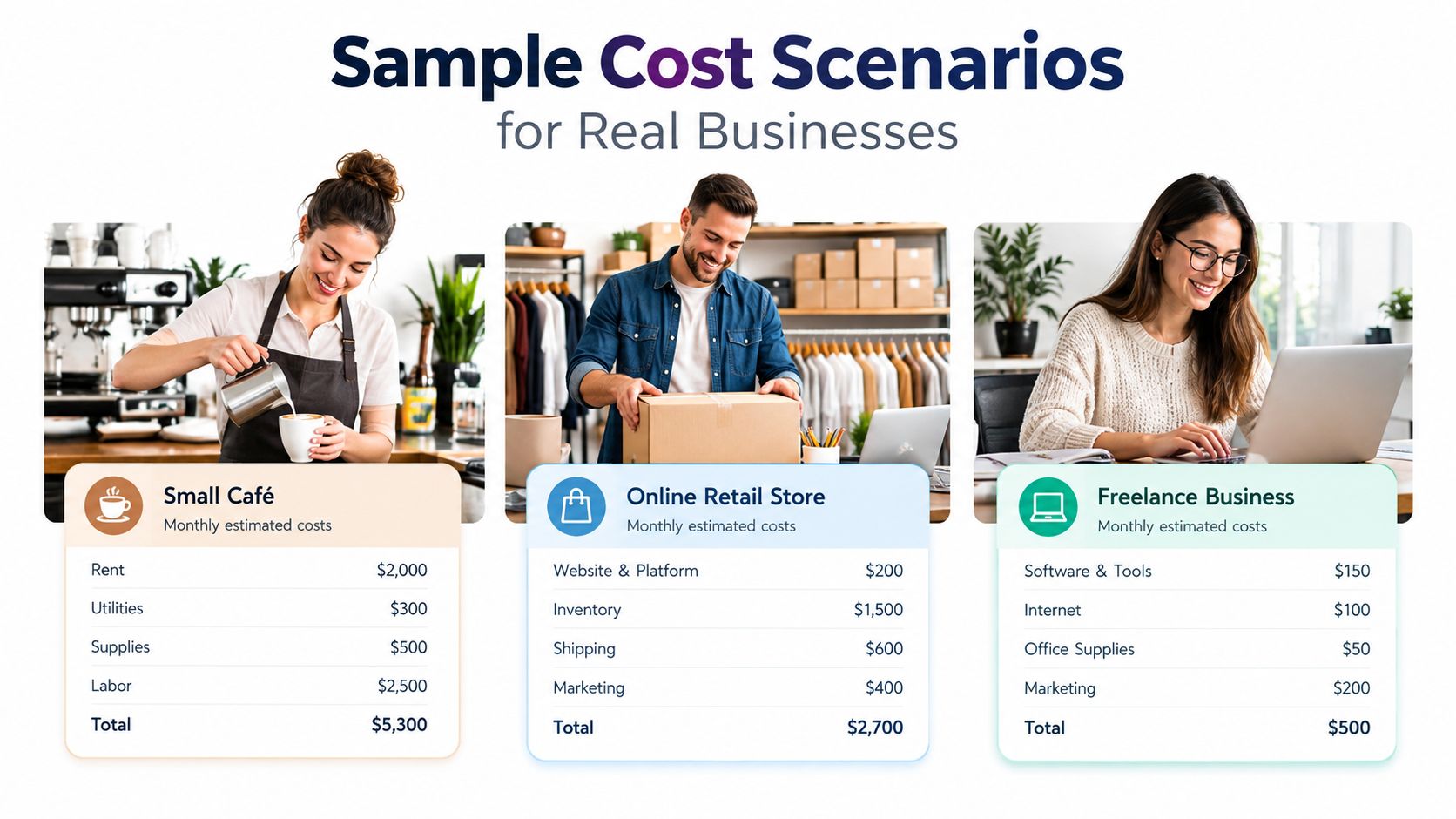
A café owner watching reservations pile up, a dentist handling cancellations, and a contractor answering calls between jobs all need the same calculation: monthly minutes, call routing, and the number of billable call legs. Start with call records rather than a headline plan. Multiply each call type by its average duration, then add transfers, fixed subscription charges, phone numbers, recording, and overages separately.
A solo tradesperson
An electrician receives irregular enquiries while working. The agent should handle service areas, opening hours, emergency rules, appointment requests, and messages that require a human response. Keep the first deployment narrow. A complicated script creates more testing and more opportunities for an unnecessary transfer.
A per-minute plan usually fits variable demand. Weather, advertising, and project schedules can change call volume quickly. Calculate the core charge as:
Monthly voice cost = monthly calls × average call length × effective per-minute rate
Then add the number fee, recording, and transfer usage. If every urgent call reaches the owner, confirm whether the provider bills the transferred conversation once or bills both telephony legs. That detail can change the forecast more than a small difference in the advertised minute rate.
Use separate rows for routine enquiries, emergency calls, bookings, and human escalations. The owner can then replace estimates with actual records after the first month.
A dental practice
A dental practice has steadier inbound demand. Appointment requests, cancellations, opening hours, location questions, and reminders support repeatable workflows. Clinical questions should move to trained staff, with the transfer rule stated clearly in the cost model.
A subscription can suit a practice that wants consistent budgeting and a shared dashboard. Compare the included allowance with monthly minutes, not call counts. A short cancellation call and a longer booking call consume different amounts of service, so treating them as equal units hides the actual usage pattern.
Model multilingual interactions before choosing a larger allowance. Language alone may not set the rate, but longer conversations, repetition, and clarification increase audio and model usage. Test each common language with the same booking workflow, then record duration, transfer rate, and completion rate.
A multi-location service company
A growing service company may receive calls for several branches, route customers to different teams, and transfer complex requests to people. Its forecast needs three separate inputs: average call duration, transfer frequency, and international or regional traffic.
Tiered billing can suit predictable volume, while per-minute billing gives an expanding company more flexibility. Compare plans with one worksheet row for each call type, not with raw call counts. Calculate routine minutes, transfer minutes, outbound minutes, and exceptional calls independently.
Model tiering follows the input/output pricing split covered earlier. Smaller models can handle routine calls, while complex conversations may require a stronger model. Some voice sessions also use elapsed-time billing, with backend usage charged separately. Treat those as separate lines in the forecast.
Use this worksheet before speaking to sales:
- Call types: List FAQs, bookings, cancellations, lead qualification, and transfers.
- Average duration: Estimate each type separately.
- Monthly minutes: Multiply call count by duration.
- Transfer rule: State whether transferred minutes are billed once or twice.
- Plan comparison: Apply the effective rate, then add fixed fees and overages.
Restaurants can apply the same method to reservations, opening hours, delivery questions, and table changes. See this guide to an AI voice agent for restaurants for that workflow. Keep the calculation visible, and update it with real call records before expanding the agent's scope.
Hidden Costs Vendors Rarely Mention
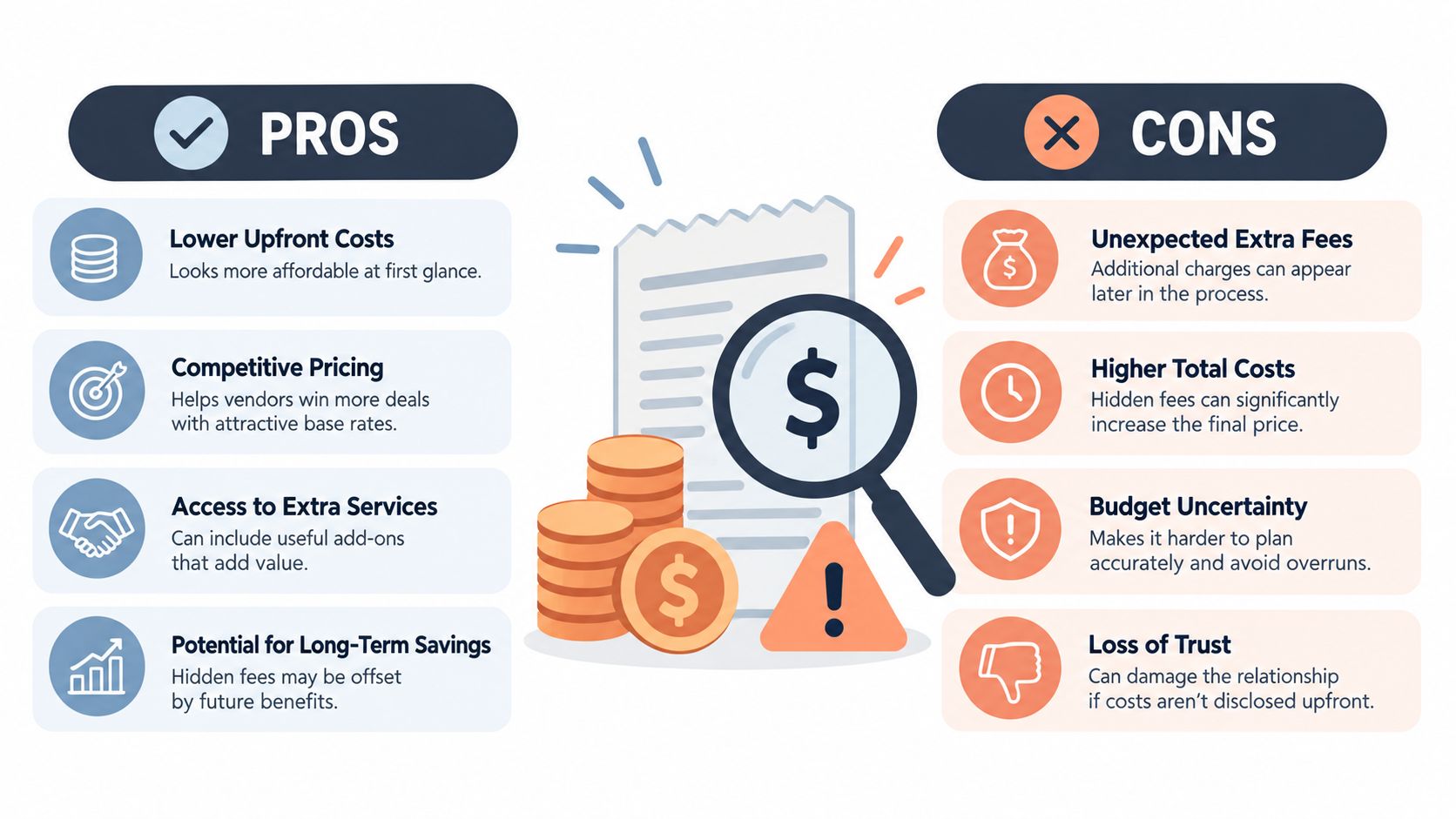
A low per-minute rate can still produce an expensive voice-AI bill. The gaps usually sit outside the headline meter: compliance work, data retention, setup, integrations, premium models, phone numbers, and human escalation.
A plumbing company may collect caller identities, recordings, transcripts, appointment details, or payment information. A dental practice may handle health details. Callers need clear information about recording, purpose, retention, and rights, while the business needs documented legal bases, deletion procedures, data-processing agreements, and suitable hosting. Review this GDPR guidance for voice systems before launch.
Price the data lifecycle
Ask what remains after each call ends. Audio, transcripts, summaries, logs, and integration events may follow different retention rules. These records can support quality checks, but they also create governance work and exposure if access and deletion are unclear.
Require these points in the quote:
- Regional hosting: Is EU or UK hosting included?
- Retention controls: Are recordings and transcripts retained by default?
- Deletion: Can the business delete data in real time?
- Access requests: Who handles subject-access requests?
- Consent records: Can the system capture and retrieve consent?
- Escalation records: Does the audit trail show when and why a call reached a person?
Outbound calling needs its own compliance line. A $4.5 million FCC enforcement action in 2025 involved absent verifiable consent records for outbound calling, demonstrating that a cheap call can create substantial compliance exposure. Use the FCC enforcement announcement or a reputable report on the action to verify the case and make consent records part of the operating process.
Look beyond minutes
Setup fees, premium voices, advanced models, phone numbers, recording, storage, integrations, and custom workflows can change the final invoice. International traffic may also carry different rates by destination and number type.
Price the complete workflow, not just talk time: answer, understand, act, record, transfer, and delete. A cheap basic meter can cost more than a higher visible rate once every operational requirement is added.
For a receptionist-style deployment, compare the monthly invoice with the operating work attached to it. This virtual receptionist cost guide provides a useful reference for that broader calculation. Insist on separate lines for compliance, storage, transfers, integrations, and support before signing.
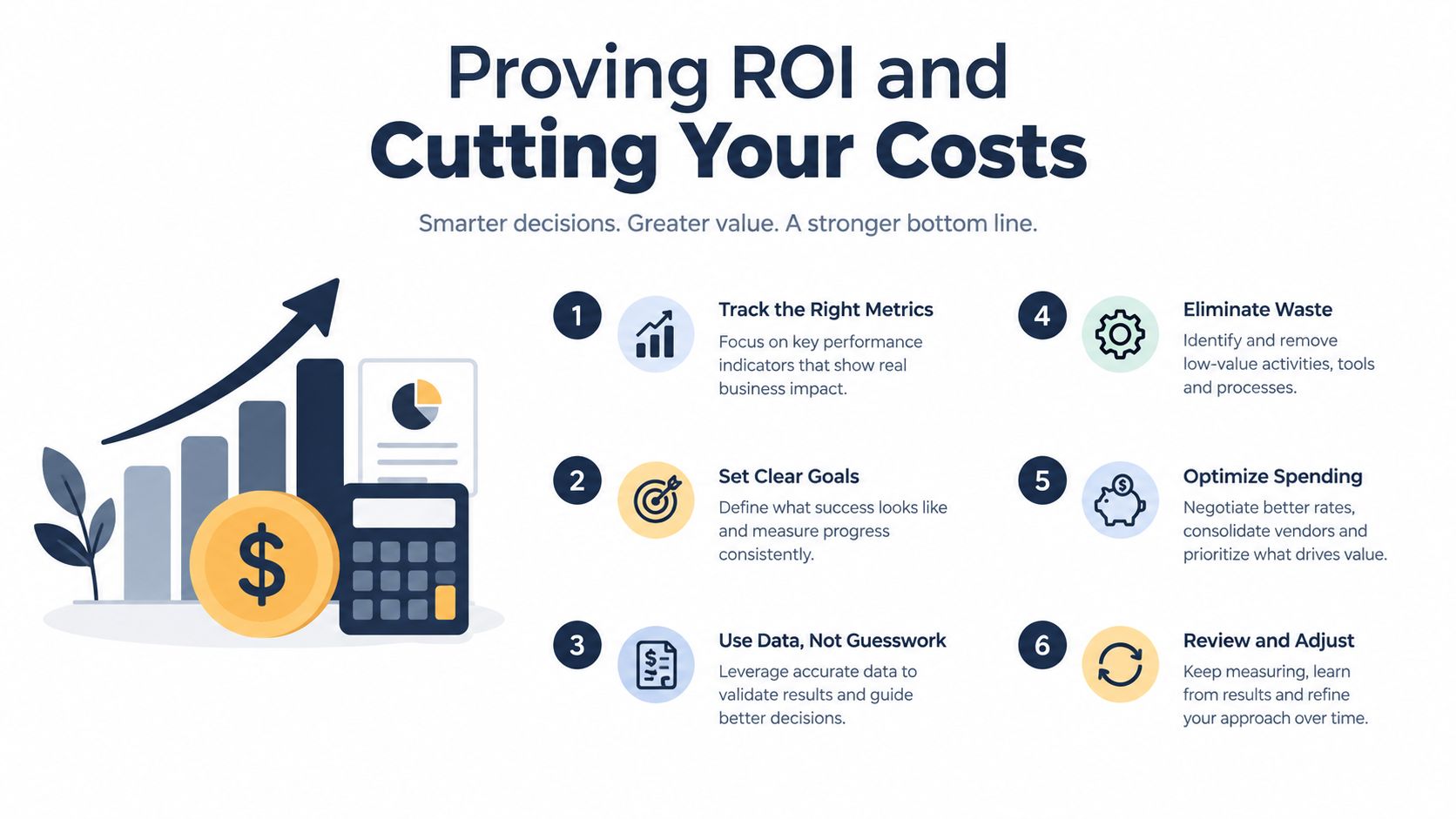
Proving ROI and Cutting Your Costs
The strongest SMB case is not “replace every employee.” It's human-plus-AI service. The agent handles routine questions, collects information, books appointments, and qualifies leads. People handle sensitive cases, complaints, unusual requests, and conversations where judgment creates value.
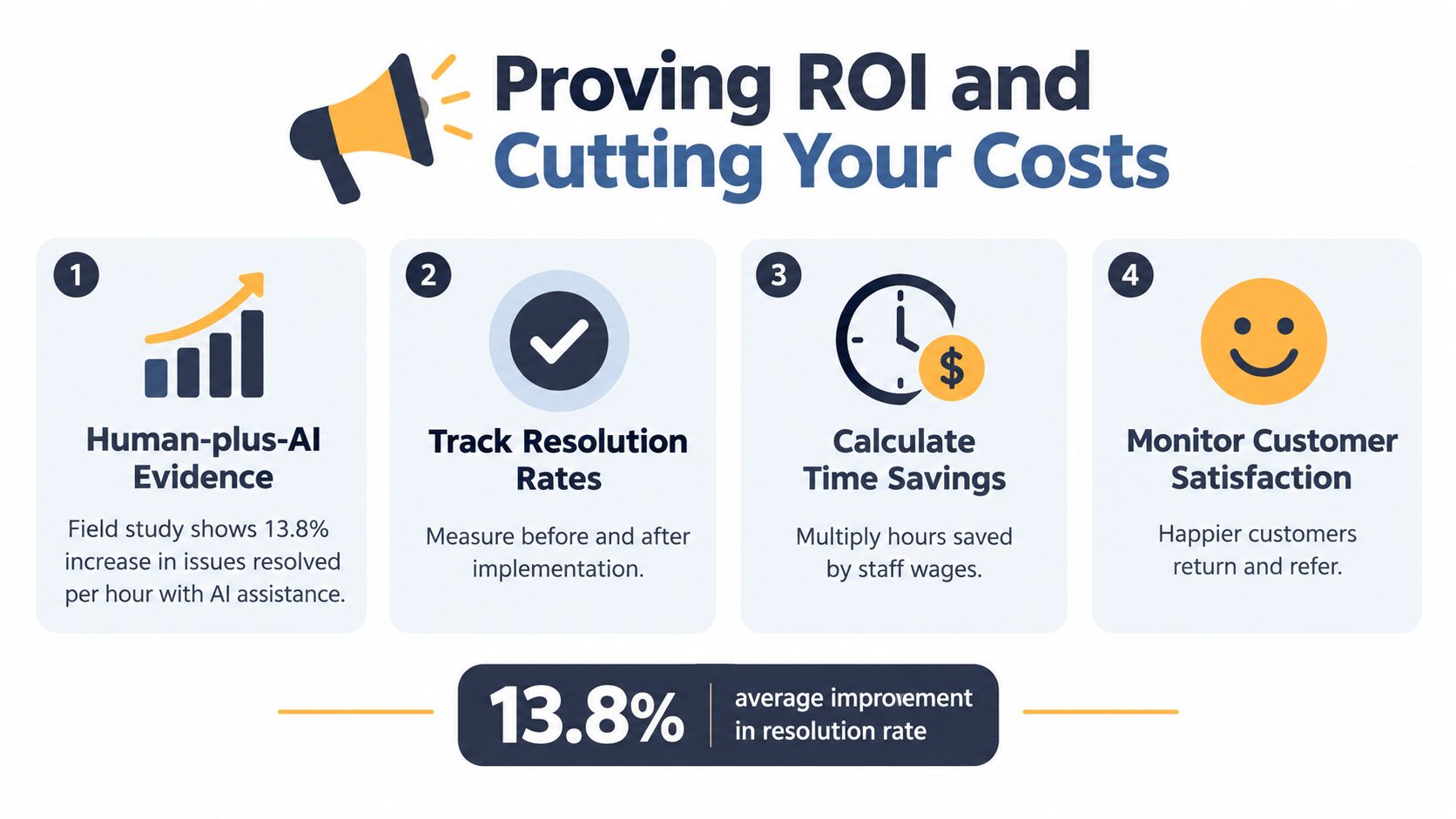
A large field study of customer-support workers found that AI assistance increased issues resolved per hour by 13.8% on average. The effect was strongest among less-experienced and lower-skilled agents, whose productivity rose by about 35%, while experienced high performers saw little or no negative impact. (field study on AI assistance and support productivity)
For a small company, that points to a practical division of labor. The agent gathers the caller's name, reason for calling, preferred time, and relevant details. The employee receives a clean summary and starts with the difficult part instead of repeating basic questions.
Reduce cost without damaging service
Start with a narrow queue. Opening hours, pricing FAQs, appointment requests, job-status updates, and basic lead qualification are good candidates because the answers and actions can be defined clearly.
Then apply four controls:
1. Use model tiering. A smaller model can handle routine questions. Escalate to a stronger model when the caller needs complex reasoning or a high-value decision. 2. Measure completed outcomes. Track cost per completed booking, qualified lead, resolved request, or successful transfer, not just cost per minute. 3. Control verbosity. Short, accurate responses reduce unnecessary output audio and keep the caller moving. 4. Design escalation rules. Transfer when the caller asks for a person, expresses strong dissatisfaction, or moves outside the agent's scope.
The European disclosure rule is operational, not theoretical. The EU AI Act requires systems that interact directly with people to tell them they're interacting with AI unless that fact is already obvious, and the disclosure must come no later than the first interaction. (EU AI Act Article 50)
Start the call clearly, provide a human route, and make the handoff useful by passing the collected context. That protects trust while keeping staff focused on the conversations where they matter.
Questions to Ask Before You Sign
Take this checklist into the vendor call. If the answers aren't written into the quote or contract, assume the cost is unresolved.
Billing mechanics
- Minute definition: Does billing start at connection, first speech, or another event?
- Rounding: Are partial minutes billed precisely or rounded up?
- Transfers: Are transferred minutes billed once or separately for each call leg?
- Audio metering: Are incoming and outgoing audio measured separately?
- Commitment: Is there a minimum monthly spend or unused allowance?
- International usage: What changes for callers in other countries?
- Top-ups: Can you add credit without changing plans?
Compliance and data
- Hosting: Is EU or UK hosting included?
- Retention: Are recordings and transcripts kept by default?
- Deletion: Can data be deleted in real time?
- Requests: Who handles subject-access and deletion requests?
- Consent: Can the system capture and retrieve consent for outbound calls?
- Sensitive data: What restrictions apply to healthcare, legal, or regulated conversations?
Operations
- Setup: Can the agent go live in minutes rather than becoming a multi-week project?
- Escalation: What triggers a transfer, and is the caller's context passed to staff?
- Integrations: Are calendar, CRM, email, and SMS actions included?
- Languages: How does the system handle your customers' languages and accents?
- Support: Who fixes routing, knowledge, or call-quality issues?
A reasonable pilot starts with one queue, one number, and a defined success measure. Match the pricing model to your call pattern, demand visibility into every cost layer, and scale only after the agent proves it can complete useful customer-service outcomes.
---
rednea provides a 24/7 AI phone assistant for tradespeople, freelancers, dental practices, and other SMBs, handling routine questions, bookings, lead qualification, multilingual calls, and human escalation with transparent per-minute billing and top-up flexibility. Visit rednea to see how a small, practical deployment can replace missed calls with structured customer follow-up.
Try rednea, no strings attached
AI phone assistant for business. Hear a live demo in your browser, book a call with our team, or get started — from £90/month, cancel monthly, no minimum term.
GDPR-compliant · EU & UK GDPR · Multilingual